2026 Schedule
During the day, you’ll hear from experienced storm photographers, lightning specialists, educators, and forecasters who spend real time in the field each year studying and documenting the Southwest monsoon. The sessions are designed to be practical, experience-driven, and immediately useful whether you’re refining your forecasting workflow, improving your lightning captures, or learning how others approach structure and timing in rapidly changing conditions.
- 8:30 - 9:00 a.m.
- Registration in the lobby of the Warden Oasis Theater.
- 9:00 - 9:55 a.m. Keynote — Jim Tang: Seeing the Structure: Anticipating Storms Before the Shot Happens
-
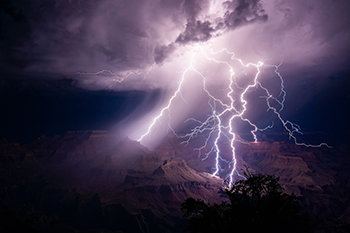
In this keynote session, Jim Tang shares how experienced storm photographers move beyond reacting to weather and begin anticipating it.
Drawing from his evolution as a storm chaser and photographer, from early exploration in California to chasing more regularly in the Great Plains after relocating to Oklahoma City, Jim walks through how his approach to reading storms, positioning in the field, and recognizing photographic opportunity has changed over time.
Rather than focusing on camera settings, this session explores how to interpret storm structure as it develops, connect forecasting to real-world composition decisions, and recognize visual signals that suggest when a storm is about to organize into something memorable.
Through real-world examples and lessons learned along the way, attendees will come away with a clearer mental framework for how experienced storm photographers think ahead of the moment and how to apply those insights during monsoon season in the Southwest.
- 10:00 - 10:40 a.m. Donna Ruthruff: From First Storm to Award-Winning Images: Building Skill Over Time
-
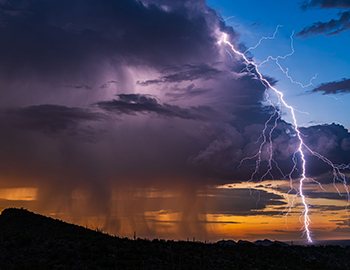
Every storm photographer begins with uncertainty, learning how to read storms, where to position, and how to recognize moments worth capturing. In this session, Donna Ruthfuff shares her personal progression from early chasing experiences to producing award-winning severe-weather images, offering insight into how photographers grow their skills over seasons in the field.
Rather than presenting storm photography as a collection of techniques, Donna focuses on how experience reshapes the way photographers interpret storms, anticipate structure, and build stronger compositions over time. Through real examples from her own development, she illustrates how confidence builds gradually through observation, experimentation, and reflection after each season.
The session highlights the turning points that helped accelerate her growth and the lessons that continue to shape her work today.
Topics include:
- Recognizing how storm photography skills evolve from season to season
- Identifying opportunities for stronger composition in fast-changing conditions
- Developing a more intentional approach to documenting severe weather
- Building a portfolio that reflects growth rather than isolated success
- Lessons that help shorten the learning curve for newer photographers
Attendees will leave with a clearer understanding of what meaningful progress looks like in storm photography and how to continue building confidence in their own work over time.
- 10:45 - 11:10 p.m. April Madison: Wonders of Weather in the Sonoran Desert
-

April explains how weather in the desert is more than just sun and heat. She covers how Monsoon weather patterns relate to atmospheric conditions, and how meteorologists use that information to create outlook forecasts for the season. Attendees will learn about the "Tools of the Trade" that make up the final product - the KGUN9 Weather Team's on-air presentations to the local community.
- 11:15 - 11:40 p.m. Spike Davis: Starting Strong: Building Experience Quickly and Finding Your Voice in Storm Photography
-
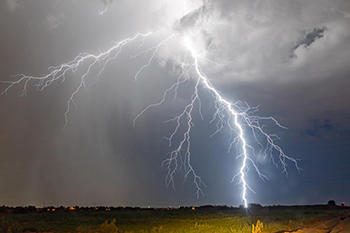
Spike Davis shares lessons from the early stages of developing real field experience as a storm photographer and how newer voices are influencing the direction of storm chasing today.
For many photographers entering the storm community, the challenge isn’t access to information, it’s knowing how to translate that information into meaningful experience in the field. Spike discusses what accelerates learning early on, how newer chasers are approaching forecasting and positioning differently, and how emerging photographers are shaping the visual storytelling of modern storm documentation.
Rather than focusing on technique alone, this session highlights the mindset shifts that help newer photographers grow faster and more intentionally across their first several seasons.
Topics include:
- How to build real storm experience efficiently across multiple seasons
- Lessons learned early that improve long-term success in the field
- Common mistakes newer storm photographers make when starting out
- Balancing photography goals with safety and situational awareness
- How newer photographers are influencing the style and direction of storm imagery today
This session offers practical insight for photographers at the beginning of their storm chasing journey while giving the broader audience a look at how the next generation is helping shape where storm photography is heading.
- 11:45 - 12:15 p.m. Jeff Boyce (Bolt⚡Hunter): The Science of Lightning Photography & Triggers
-
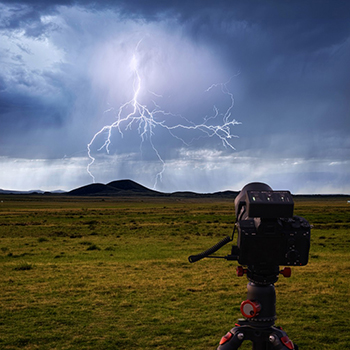
Lightning photography is one of the most rewarding and unpredictable parts of monsoon season. Successfully capturing lightning can be incredibly difficult, and consistent results all comes down to the timing.
In this session, Jeff Boyce shares insights from developing the Bolt⚡Hunter lightning camera trigger, based on years of field research, data collection and analysis, and testing different strategies. Learn how lightning actually develops, how triggers respond, and most importantly, why they work — and why they fail. The session also compares triggers with other methods like long exposures and modern mirrorless features like pre-capture to show what works in real-world conditions and how to improve your results.
Topics include:
- How lightning develops and why timing matters
- Why triggers work, and why they can fail
- Triggers vs. long exposures vs. pre-capture, and how to use them together
- Camera limitations: shutter lag, buffer/lockout, burst rates
- Exposure challenges in daylight and at night
- Lightning photography safety
Attendees will gain practical knowledge of how different capture methods perform in real conditions, and how to improve their success rates and their image quality.
- 12:15 - 1:30 p.m. Lunch
- In the Green Room, Baldwin Education Building
- 1:30 - 2:25 p.m. Patrick Bunn: Reading the Model: How the UA WRF Helps You Predict Monsoon Storm Development
-
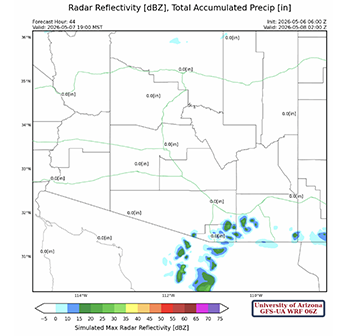
Monsoon forecasting depends on accurate, high-resolution modeling, and few tools are better suited to the Southwest than the Weather Research & Forecasting model run by the University of Arizona. In this session, Dr. Patrick Bunn walks through how the UA WRF works, what makes it particularly effective for predicting monsoon thunderstorms across southern Arizona, and how storm photographers and chasers can use its output to make informed decisions in the field.
Rather than treating forecast models as a black box, this session breaks down what UA WRF is actually telling you compared to other models, how to interpret its output for storm timing, initiation, and propagation, and how to integrate that information into a practical chase day workflow.
Topics include:
- What the UA WRF model is and why it’s well-suited to Southwest monsoon forecasting
- How to read model output to understand the likelihood of convection and the types of thunderstorms and hazards possible
- Using UA WRF data to anticipate where convection is likely to fire
- Connecting model forecasts to real-world positioning decisions in the field
- Common misinterpretations of model output and how to avoid them
Attendees will leave with a clearer understanding of how to use the UA WRF as a practical field tool, not just a forecast reference, and how to apply it to improve their timing and positioning during the monsoon season.
- 2:30 - 3:25 p.m. Jeremy Perez: Reading the Sky: Using Weather Data to Anticipate Structure, Positioning, and Composition
-
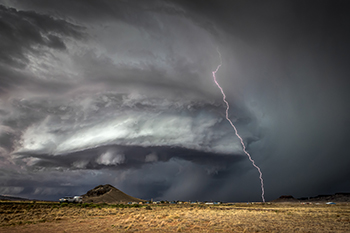
In this technical session, Jeremy Perez focuses on how storm photographers can use real forecasting tools and visual storm cues to improve positioning, timing, and composition in the field. Browsing forecast models and real-time observations without understanding how they affect storm evolution can be frustrating. Jeremy breaks down how to interpret weather information before and during a storm chase so photographers can anticipate structure sooner and make more intentional decisions about where to set up as storms develop.
Drawing on his twenty-year background in astronomy education and teaching how to interpret atmospheric conditions for photographers, Jeremy connects technical concepts to visual outcomes. Rather than treating weather data as abstract information, this session shows how it translates into practical positioning choices that improve the odds of capturing structure, lightning, and dynamic monsoon scenes.
Topics include:
- Interpreting radar structure beyond simple reflectivity intensity
- Recognizing boundaries—outflow, convergence zones, etc.—to improve photographic options
- Identifying early signals of storm organization during monsoon setups
- Using satellite and surface observations to anticipate storm development and evolution
- Translating forecast information into real-world positioning strategy
- Choosing locations that support stronger foreground and structure alignment
Attendees will leave with a clearer understanding of how to read and interpret weather information the way experienced storm photographers do, and how to use those insights to arrive in the right place before the best moments unfold.
- 3:30 - 3:55 p.m. Wrap-up
- Thanks & acknowledgements, final raffles, and general socializing.
- 4:00 p.m. Close of Conference
- 5:00 - 10:00 p.m.
- Enjoy "Cool Summer Nights: Western Night" at the Desert Museum